


Sea Tow Southcentral Alaska takes center stage in this second edition of “Alaska Focus.” As we continue exploring Alaska businesses that strengthen our communities, this company delivers essential marine assistance with preparedness, reliability, and dedication to helping fellow Alaskans when it matters most.
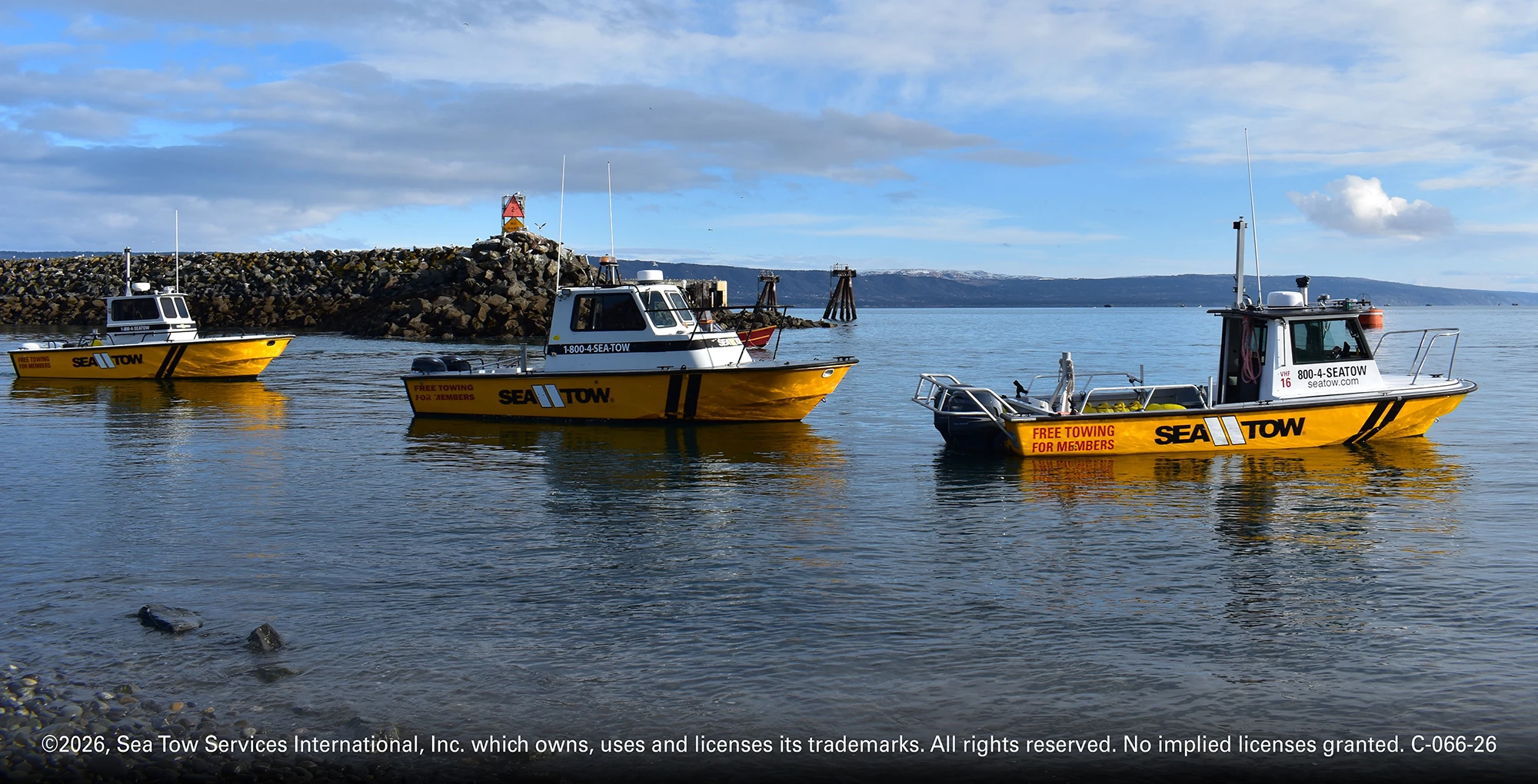
Fleet leaving the Homer Harbor. Photo credit Nina Aviles.
Sea Tow Southcentral Alaska is a success story: a brand-new franchise location built through dedication, sacrifice, and commitment. When I first started working with Trey Hill, our initial conversation revolved around these concepts. I shared that we had a similar experience with founding Fish Alaska, and that despite the challenges, roadblocks, stress and sleepless nights, developing a smart business plan and staying true and fully committed to the vision would bring them success. We talked about how with 100% commitment, obstacles could be navigated and solutions found. Too many people start businesses and aren’t willing to do the necessary hard work, day in and day out, to find success.
When the business opened on January 1, 2018, Sea Tow Southcentral Alaska had six members and one location. After eight years, the franchise has expanded and now operates in three locations. I’m not saying it was easy getting here. There were quite a few very lean winters, which ramped up the stress. There was plenty of sacrifice, from uprooting a young family with a new baby from Eagle River to Homer, to living in a small studio for several years behind their storefront, with no shower and no laundry. From having a lucrative career as an engineer, to embracing risk and listening to his gut, Trey Hill took a different path to allow him to do things that he loved and to be his own boss. Through hard work, perseverance, following a sound business plan, and remaining mentally committed, the Hill family brought this business to the level of success it currently enjoys. And there’s lots more on the horizon.

Sea Tow Whittier on patrol in Prince William Sound. Photo credit Capt. Mike Stone.
Building Alaska’s Marine Safety Net
Fish Alaska magazine: How did you get into the business? Give us some background about yourself.
Sea Tow Southcentral Alaska: Prior to opening the first Sea Tow location in Alaska, I was a drilling fluids engineer in the oil and gas industry, lived in Eagle River, AK, and was an avid recreational boater. I really enjoyed boating and fishing in southcentral Alaska’s saltwater out of Homer, Seward, and Whittier and I’ve been drawn to it my entire life. Whether it was lakes, rivers or the ocean, I just loved being on and around the water. As a kid, I remember when my family and I went on camping trips to places like Homer and Seward, I would spend a lot of my time walking the boat harbors, looking at all the different vessels and dreaming of owning an ocean boat one day. There’s just something about boats!
In late February of 2016, my fiancé, now wife, decided to go to Homer for a long weekend and celebrate her birthday boating around Kachemak Bay. So, we set off on our 1991 24’ Bayliner Cierra Command Bridge and headed to Bear Cove. Just as we were entering the cove, my engine went out. I did some initial troubleshooting but could not get it going again. I hadn’t stressed out yet because I knew my trusty 9.9 HP kicker would get us 15 miles back to the harbor…. NOT. The winds were picking up, the seas were choppy and I quickly realized my kicker was not going to be able to overcome the weather and tide; then I panicked.
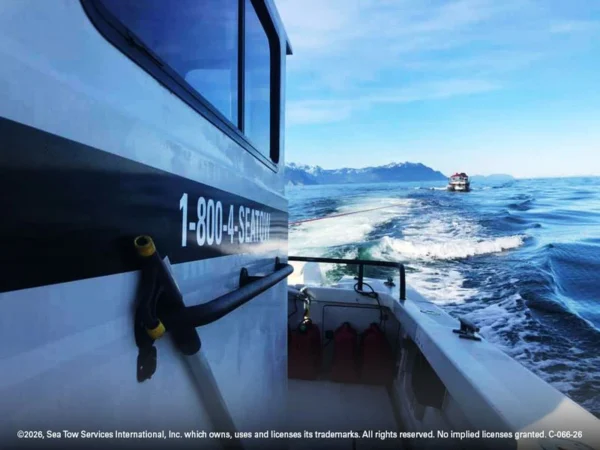
Sea Tow Seward towing a disabled vessel in the Gulf of Alaska back to the Seward Harbor. Photo credit Capt. Trey Hill.
I had always had this idea that if anything ever happened to my main engine I could self-rescue, but that was not the case in this situation, and I had never thought past this point. I really didn’t know what to do. There were no Good Samaritans around and I didn’t know who to call, so, I called the Homer Harbormaster. They said that they could not leave the harbor and that I had a couple of options: I could call a Good Samaritan, or I might be able to get ahold of one of the local water taxi services.
I did know that if it were a life-or-death situation I could hail the USCG, but our situation didn’t meet that criteria. I opted to call one of the local water taxi services. They were willing to help but it would be several hours before they could come tow us due to their current workload. They instructed us to anchor and wait. And we did. A few hours later, the water taxi arrived and towed us back to Homer Harbor. Of course this was not cheap. Back in 2016, the average hourly rate for on-water services, if you could find it, was $200-$300/hour. We paid the water taxi about $1,000 and pulled our boat out of the water.
We trailered our boat to a Homer-based marine technician for repairs. As they were working on repairs, I had a conversation with a tech about our stressful and expensive experience. We talked about how there was no reputable or reliable on-water service provider in Homer or any of the surrounding nearby coastal areas like Seward or Whittier. The tech said, “I can’t believe there is no Sea Tow in Alaska.” I was clueless and had no idea what Sea Tow was or even of the concept, so the tech explained that it was a lot like roadside AAA, and as a member, you received certain covered services on the water. The light bulb went off in my head, and that is how Sea Tow Southcentral Alaska came to be!

Sea Tow Whittier tandem towing two disabled vessels back to the Whittier Harbor. Photo credit Capt. Trey Hill.
Fish Alaska magazine: What services do you offer and where?
Sea Tow Southcentral Alaska: Sea Tow has been the leader of on-water assistance since 1983. The concept was established in Southold, New York, where the operation is still based out of today. Over the last four decades, it’s grown into a thriving network of franchisees. The thing about Sea Tow though, is that each franchise location is locally owned and operated, so every owner has stake in the game. We first opened in Alaska in 2018 and have grown to service Homer, Seward, and Whittier. We have boats and captains in each location standing by 24/7/365.
On-water assistance is what we do. This includes towing, jump starts, fuel/parts delivery, covered ungroundings, prop disentanglement, and more. Off the water, members can tap local captains for their local knowledge and referrals, anchorages, troubleshooting, tides, and weather. We always try to go above and beyond for our members! If you’re not one, these services come at a premium, out-of-pocket, hourly rate.
We offer Sea Tow memberships for almost every type of boater. For recreational boaters, annual Gold Card membership costs $249. For commercial boaters and boaters who make a living on the water, we offer a Commercial Card and Professional Mariner Card, we just ask that you call the local operator so they can give you something that best meets your needs. Sea Tow also provides on-water services outside of membership including boat salvage and recovery, spill contracts, and captains for hire.
Fish Alaska magazine: What are your company’s core values?
Sea Tow Southcentral Alaska: Safety, professionalism, dedication, responsiveness, and consistency.
Why We Always Prepare for the Worst: Mayday on the Sound
Fish Alaska magazine: Share an example of a rewarding rescue.
Sea Tow Southcentral Alaska: We have had quite a few harrowing and wild encounters over the years. When it comes to tragedy or very close calls, I find that there is always a lack of boating education. I’m a huge advocate for safe boating courses no matter how new or salty someone is.
To be clear, 99% of what we do, is not it a rescue; Sea Tow is non-emergency response. It’s only when there is a true life-or-death situation that requires immediate help, and we’re called upon to assist by the USCG. One of our first real incidents took place Memorial Day Weekend in 2021 in Whittier. There was a forecasted storm so we did not anticipate that much would be happening on the water. The winds and sea were snotty on the Prince William Sound; that’s when I received a call from a member yelling “MAYDAY, MAYDAY, MAYDAY – I need help, my engine died and I’m being blown close to shore.”
Side note – if you are ever in an emergency situation on the water, ALWAYS call the Coast Guard or 911 first.
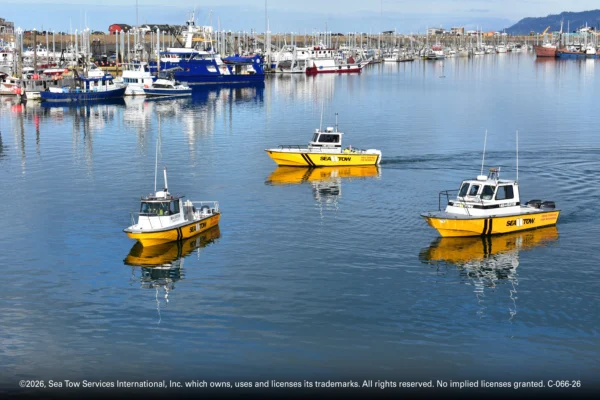
Fleet pics in the Homer Harbor. Photo credit Nina Aviles.
Anyway, the boater did not have an anchor on board, I was worried about the time it would take me to get there, so they found a Good Samaritan who towed them to a nearby cove to anchor about 10 miles from the Whittier Harbor. Once I received that news, my blood pressure dropped, and I said something along the lines of, “I’m glad you’re safe. Standby and wait until I can get there safely.”
Well, I’d say it was no more than an hour went by when I received another “MAYDAY” call from the same boater. He had got the motor running and thought he was going to limp to the harbor, but the weather was too much. By the time I found them, they had been blown on the beach but it was too rough from me to get in. I no longer cared about the boat, just about getting the husband and wife off the beach and back to port.
At this point, I knew the only option was to hail the USCG and request a Search and Rescue (SAR) helicopter be on route from Kodiak, but the boater refused and wanted to ride the storm out on the beach. Regardless, I informed the USCG and they started an hourly communication cycle with the boater. Sometime after midnight, the boater called again to say they were abandoning the vessel because the incoming tide and waves were starting to hammer the boat, which left them on the beach at the mercy of the wind, rain, and dropping temperatures. The USCG dispatched the helicopter from Kodiak immediately.
Now that the USCG chopper was inbound, I felt more confident that this situation would have a lifesaving ending in the new couple of hours. It took longer than expected for the helicopter to arrive because they were fighting the same aggressive storm. When the sun finally began to rise and the wind laid down, I informed the USCG I was heading out as well.
Thankfully, my wife was in town for the holiday week and headed out with me. Alyssa is a registered nurse and a very good one at that. As we approached the beach, from afar, I could not see or locate the boat. As we got closer, we heard the rumble of the helicopter and finally saw two people with their backs to the steep rocky shoreline and the high tide at their feet. Eight hours ago, there was a lot more beach, now it was damn near gone. Even 100 yards away we could tell that the husband and wife were hypothermic and not in great shape.
As I went to put my boat up on the beach, the helicopter was not more than 100 feet above my head. The pilot and I agreed that I would attempt to get on the beach and retrieve them. If that failed, then the rescue team would step in. I successfully landed the boat, my wife made her way to the bow, and with great effort, got the pair onto our boat. Together, we got the couple inside the cabin to begin the warming process. Both were soaking wet and hypothermic. Wearing only jeans, hoodies and light jackets, they were by no means prepared for a situation like this.
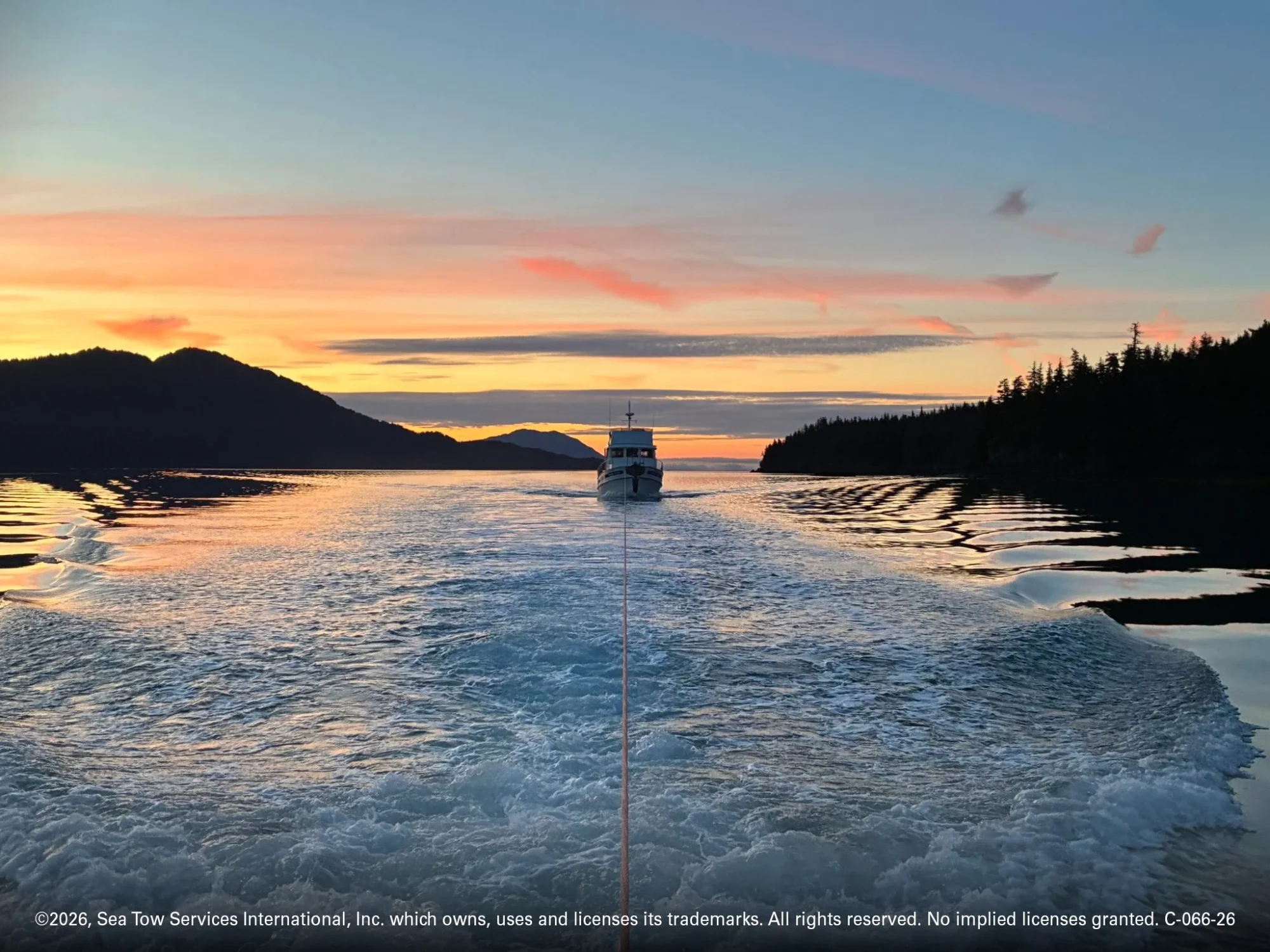
Sea Tow Whittier returning to Passage Canal in the early morning after an all-night tow. Photo credit Capt. Rick Reger.
My wife kept helping them and I got the boat on full step back to the harbor which was about a 30-minute ride now that the weather and seas had laid down. While in route, I called 911 and made sure that Whittier EMS was waiting at the boat ramp. The USCG helicopter watched from above until I returned to the harbor safely and then headed back to Air Station Kodiak.
Post rescue, both husband and wife were so grateful for the work that we and the USCG did to bring them back home safely. The husband admitted there were a lot of lessons learned to take away from the situation. First being, even if you are just going to go out for a break-in run or a quick sea trial, you need to be prepared for the worst. Like having all the basics on the boat: anchor, VHF, lifejackets, survival bag with extra layers and back-up radio, etc. They had a false sense of security thinking they were just going to go for a quick sea trial. Always be prepared! A day or two after this event took place, I was hired to recover/salvage the boat. The boat never moved from the initial location. It was just when my wife and I were approaching the beach that morning that we couldn’t see it from afar because it was underwater at high tide. At low tide, it was again high and dry.
Growing Roots in Coastal Communities
Fish Alaska magazine: Where do you see the company heading in the next 10 years?
Sea Tow Southcentral Alaska: In the next 10 years we hope to continue to grow our membership in the locations we currently own—Homer, Seward, and Whittier—and expand our footprint up into Valdez. We have the roots and the experience with eight years under our belts, so expansion feels right and will complete the vision I had when I first wrote that business plan. We’d also like to add additional sources of revenue. The infrastructure for other services are there, we just need to capitalize on them.
Fish Alaska magazine: Tell us about some of the unexpected benefits and responsibilities that have arisen from being in this business?
Sea Tow Southcentral Alaska: When it comes to unexpected benefits and responsibilities from being in this business, it has nothing to do with boats or the ocean but everything to do with the communities we operate in. At the very beginning of this journey, I recognized that one of our keys to success is to truly serve and be heavily involved in the community.
One of the first things I did in January 2018 was join the Homer Chamber of Commerce. I figured out how to be more involved than just showing up for parades or the typical events; I’ve been part of the Homer Winter King Salmon Tournament committee since 2018. It was my first real step into community service, and it’s been very rewarding. Since first volunteering I’ve grown to become President of the Board for the Homer Chamber.
I also joined the Homer Marine Trades Association (HMTA). HMTA’s mission and their values align with what I strongly believe in and feel is very important—supporting and educating our youth about the trade business. Getting a college education isn’t for everyone; the trades have always been and will continue to be the backbone of the American workforce. HMTA takes the same stance and works closely with the marine trade’s people of Homer and is known to lean on the slogan, “Homer is in the business of boats.” It takes an entire workforce of boat builders, electricians, welders, seamstresses, refrigeration/HVAC, boat captains, etc. to keep this business running. It’s important that our youth know of these rewarding opportunities and how to go about getting into the trades.
HMTA does exactly that by working with local schools, job centers and other community partners to hold job fairs, in-school trade classes, internships, and even offer part-time job opportunities. HMTA also presents an annual scholarship to a deserving high school student and runs a reimbursement program to help offset tuition for students taking maritime courses at Kenai Peninsula College. I have a lot of respect for HMTA and its values, that is why I now sit on their board of directors. It’s rewarding to work alongside community leaders and innovators and to be a part of Homer’s growing maritime community.
In 2021, I was approached to join the Whittier Port and Harbor Commission. I applied for the seat, was elected that same year, and have continued to serve on the commission. This also has been a very rewarding opportunity for myself, my business and I can only hope, the Whittier Port and Harbor and its users. We are currently working to finish the phase 3 harbor project. This is a multi-million-dollar project for major repairs and reconstruction of half the harbor.
These boards and commissions were important to mention because I wanted to drive home the importance of community presence. Being part of it and actively working to cultivate relationships helps establish you and your business for the long term. It’s part of growing your foundation. All while benefiting the community you live in or operate in. For example, the Homer Chamber of Commerce partnered with HMTA last year to plan and carry out the first annual “Homer HarborFest” which was a huge success and will be having its 2nd annual Homer HarborFest this June. Being part of the planning committee that brought this all together was a great opportunity for myself and my business.
Family, Crew, and Community
Fish Alaska magazine: Anything else you want to share with our readers?
Sea Tow Southcentral Alaska: When building a business, we often talk a lot about business plans, financial projections, markets, etc. But often we forget to highlight the individuals or the teams of people who help you get there. First, I could not have done this without the never-ending support of my wife Alyssa. She said yes to not only marrying me, but she also said yes to giving up our comfortable life prior to starting Sea Tow Southcentral Alaska. She has been next to me every sleepless night and through all the challenges. And, while I was working to establish this business, she was the bread winner who supported us through it all.
Secondly, my parents. They not only invested in me, but also in the business from the beginning. Starting a business requires capital. Hindsight is always 20/20, but looking back, we’re grateful for what we had – but it wasn’t easy! I’m sure there any many business owners that can relate. I thank my parents for believing in the vision and helping us along the way.
Third, my current captains and the captains who have stuck with me along the way. I have been blessed with the most incredible, safety focused, professional Sea Tow captains over the years. They are on-call 24/7, day in and day out. They drop what they are doing and head out on the water to make sure the boater they’re assisting gets home safe and sound. I appreciate our team and the work they do. We wouldn’t have the members we have now or the yearly growth that we do without them. Our Sea Tow captains are the backbone of Sea Tow Southcentral Alaska and have helped get the business to where it is today!
Lastly, there are all the strategic relationships you make along the way. Whether they sell our membership or are a publication that writes about the business, like Fish Alaska, these relationships have led to friendships and fantastic colleagues.
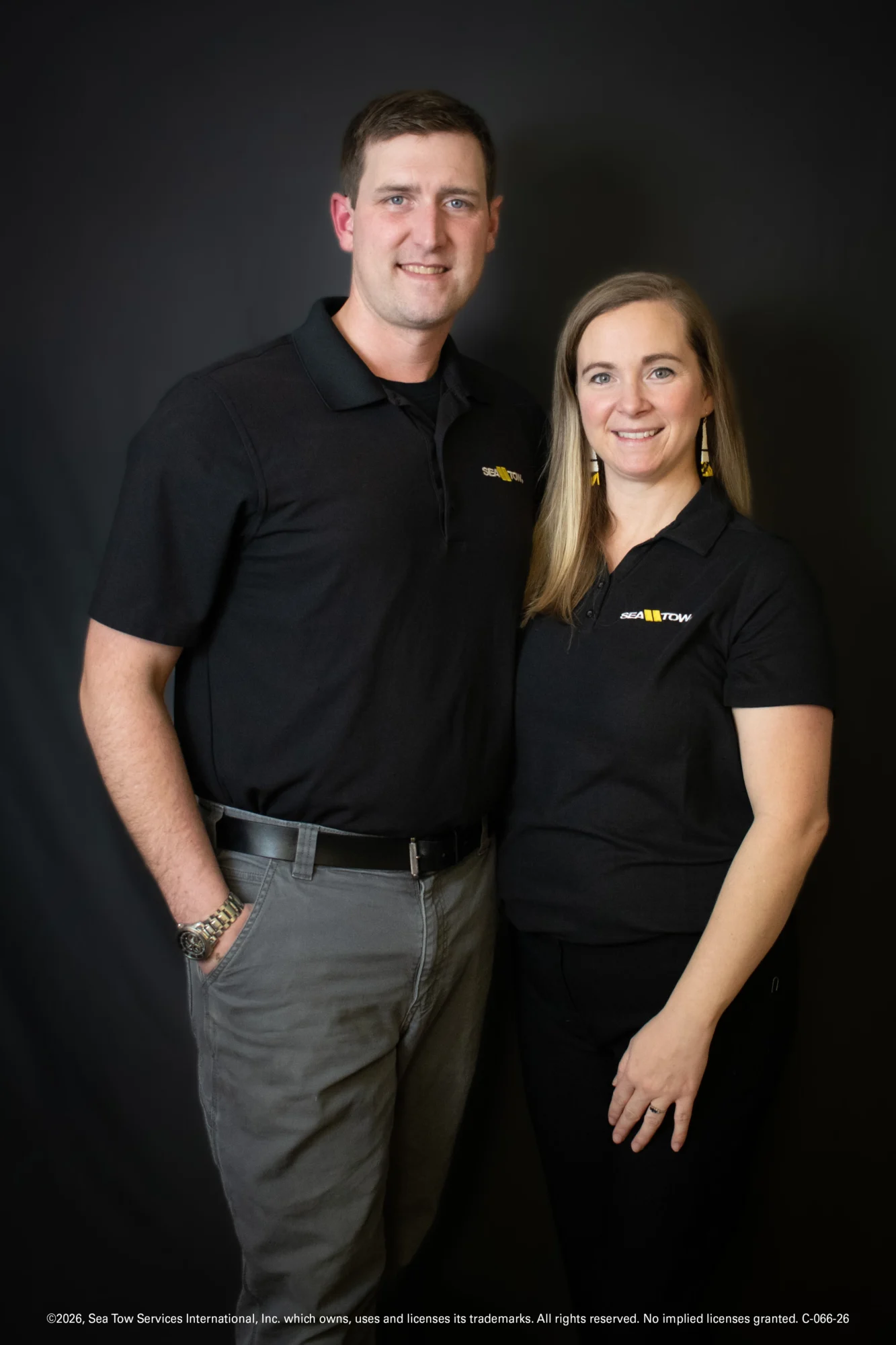
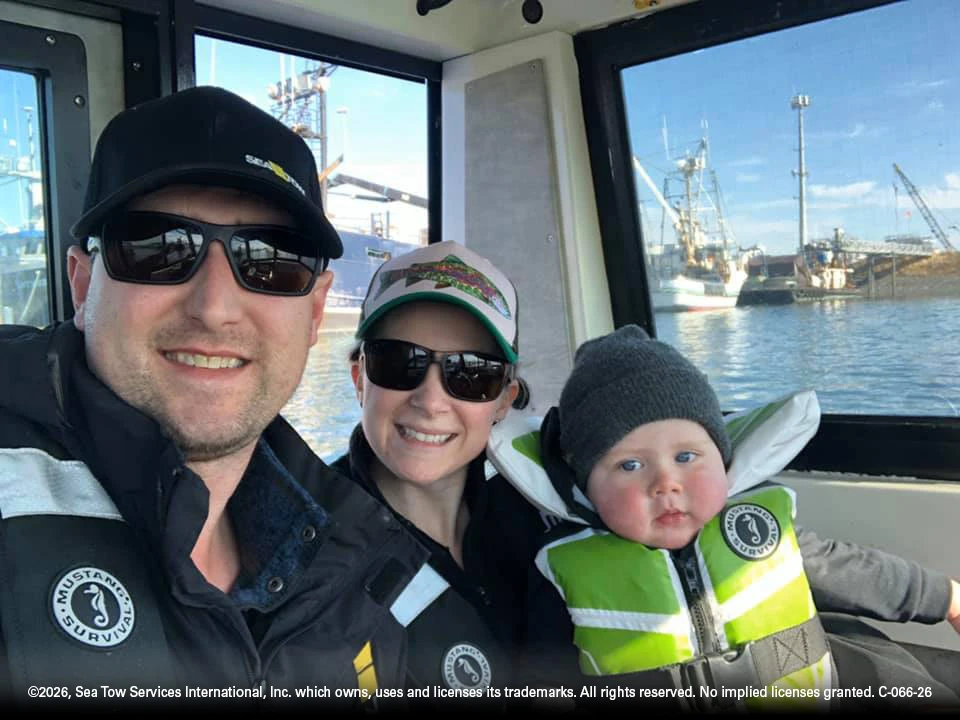
The Hill family is leaving the Homer Harbor for a fun-filled day on the water in Kachemak Bay. Photo credit Capt. Trey Hill.

Marcus Weiner
About the Author Marcus Weiner
Marcus Weiner is the founder and Publisher of Fish Alaska and Hunt Alaska magazines. Marcus has decades of experience fishing and hunting all over Alaska. In addition to managing the editorial departments for both publications, Marcus is a regular feature writer for the magazines and content provider for the websites. Check out Marcus’s YouTube Series “The Jig Life” on the Fish Alaska YouTube Channel.