

Catch and release fishing for wild King salmon is both a regulation and a responsibility on the Kasilof River this season. Here is what the 2026 rules look like, why they matter, and how to give every King you land the best chance of survival.
Written by Sean Smart with Kenai River Recon
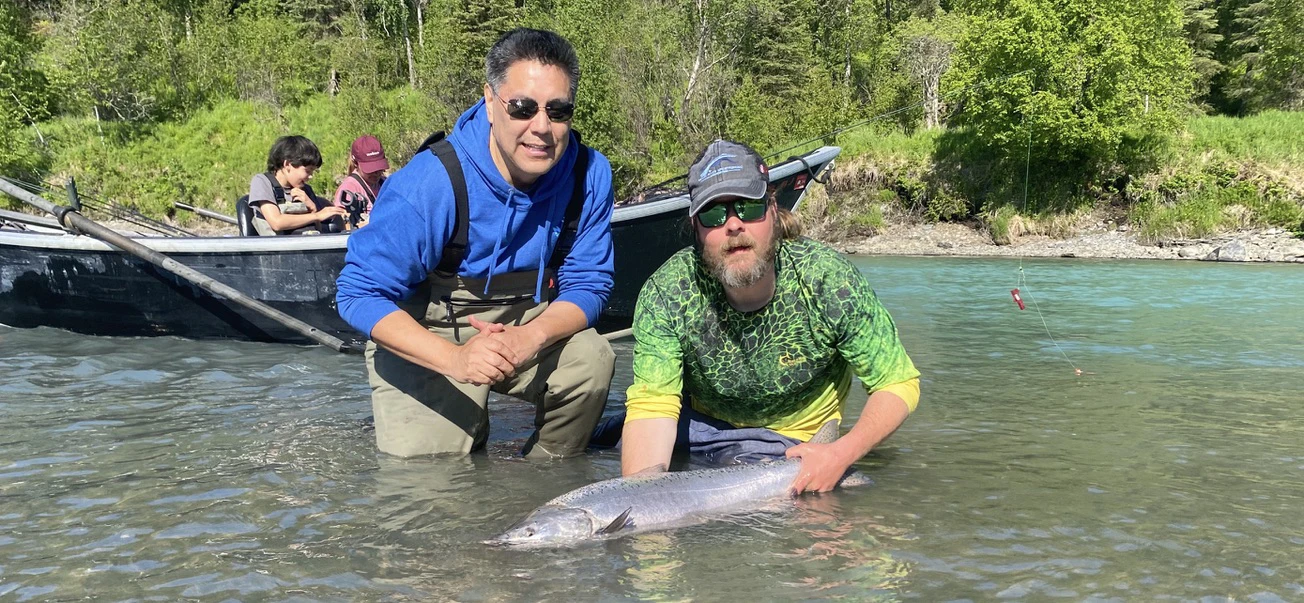
June is a great time to fish the Kenai Peninsula, and it tends to surprise first-time visitors. The rivers are active, guides are on the water, and the season is well underway.
The Kenai River has become one of Alaska’s most well-known fisheries for sockeye salmon, a run that has grown significantly over the years. King salmon, however, are a different story. Declining populations due to shifting ocean conditions and mounting human pressures have led to the Kenai River closing to King salmon sport fishing.
The Kasilof River picks up where the Kenai leaves off for King salmon anglers. Locals call it “the ditch,” and while it is smaller and quieter than the Kenai, it remains one of the only places on the peninsula where anglers can still target spring Chinook. As a bonus, the Kasilof also offers strong sockeye fishing once the spring King season wraps up, making it worth the trip well into summer.
What the 2026 Regulations Mean for Anglers
The state recently announced the 2026 Kasilof River regulations, and overall, the news is good. Anglers may still retain one hatchery King salmon per day, but bait is no longer allowed, and all wild Kings must stay in the water for immediate release.
These regulations reflect something every angler should already understand: King salmon need our help right now. One of the best ways to support the fishery is by practicing proper catch and release fishing techniques.
The Importance of Proper Handling
Wild King salmon are incredibly valuable to the future of the fishery. Many anglers understandably want their “grip and grin” photo, but how a fish is handled during those moments can mean the difference between survival and mortality. Fortunately, a few simple steps go a long way.
Use a Rubber Net
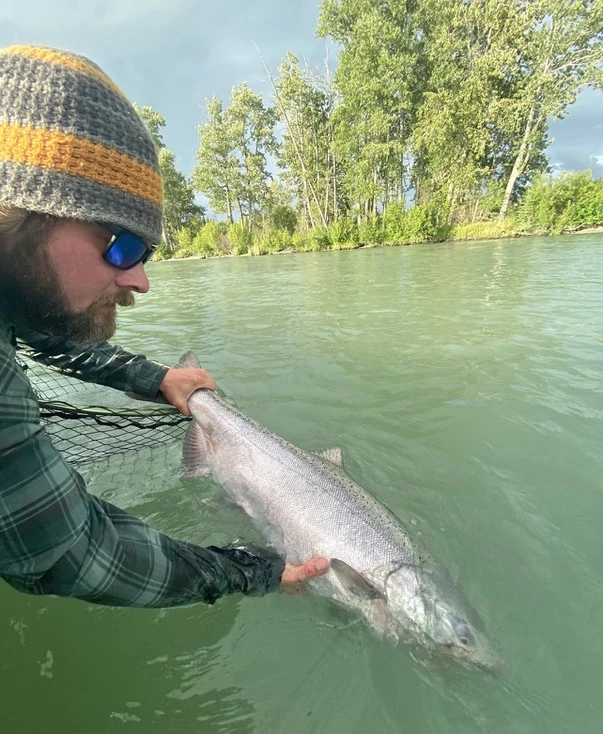
Every angler practicing catch and release fishing should carry a rubber net in the boat or on the bank. It is one of the most important tools for releasing King salmon safely. Traditional nets can strip a salmon’s protective slime coat, whereas rubber nets reduce abrasion and keep fish supported in the water.
Wet Your Hands
Before touching any salmon, wet your hands and remove gloves unless they are latex or a similarly smooth material. Salmon carry a protective mucus layer known as the slime coat. This barrier defends them against disease, parasites, and bacteria. Dry hands or rough surfaces can remove it and leave fish vulnerable after release.
Plan Before the Photo
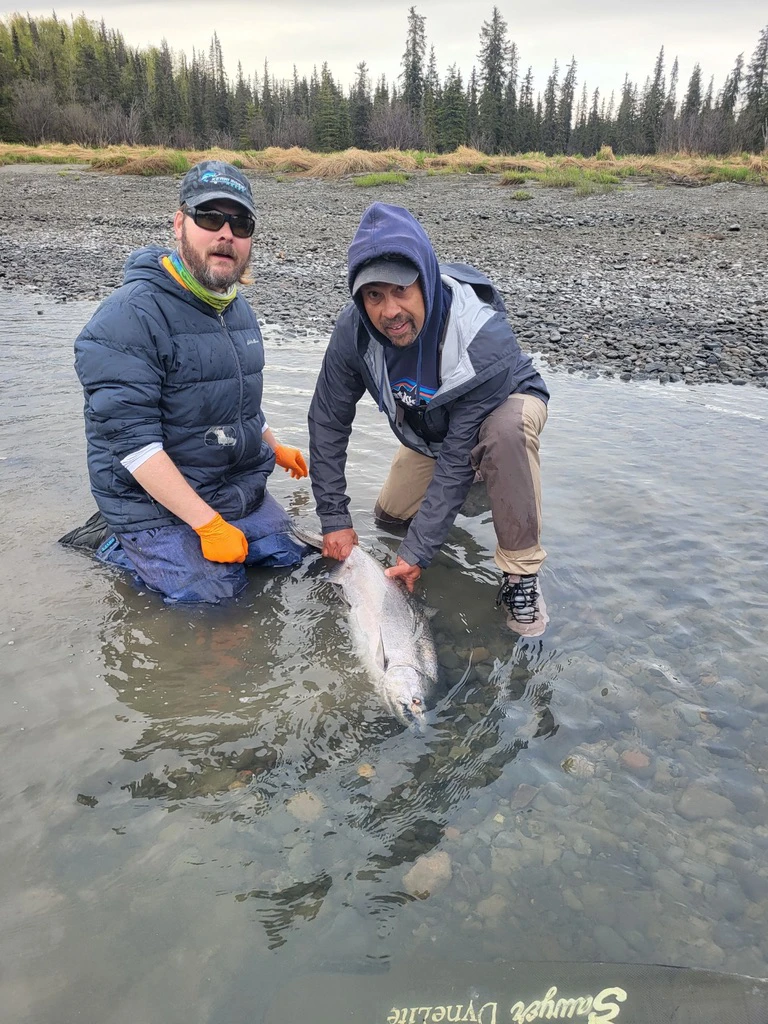
Before celebrating, anglers should have a quick plan for landing and releasing the fish. If the fish fought hard and appears exhausted, moving to shore first gives it time to recover and swim away strong. A slower release significantly improves survival odds.
If the fish was landed quickly and still has energy, a photo beside the boat works well. Keep the head and gills in the water so the fish can continue breathing throughout.
Every situation is a little different, but the goal is always the same: release the fish in the strongest condition possible.
Respect the Future of the Fishery with Proper Catch and Release Fishing
Regulations require that wild King salmon remain in the water, but beyond the rule itself is the bigger picture. These fish are essential to maintaining the Kasilof River fishery. Many will return to Crooked Creek to spawn naturally or support the hatchery program that sustains King salmon opportunity on the peninsula.
Good catch and release fishing starts with a simple “head and gills in the water” photo. It respects the regulations, the fish, and the future of the river.
With King salmon populations under pressure, every angler has an opportunity to make a difference. Handle these fish with care, and they will continue returning to Alaska’s rivers for generations to come.
Sean Smart is owner and guide for Kenai River Recon guide service as well as an obsessed Kenai Peninsula angler. Read Sean’s take on 2026 Kasilof Kings Fishing and If you want to learn more about fishing packages and day trips with Sean as your guide, check out his website.