


Pickled salmon is one of those recipes that looks deceptively simple but delivers bold, tangy flavor that gets better with time. This version from Melanie Taikupa Brown balances sweet and sour with just the right amount of pickling spice. The result is tender, flavorful salmon with a clean vinegar bite and a hint of sweetness from the onions. It is easy to make, requires no canning, and is ready to eat in just three days. Perfect for snacking, appetizers, or adding to a charcuterie board.
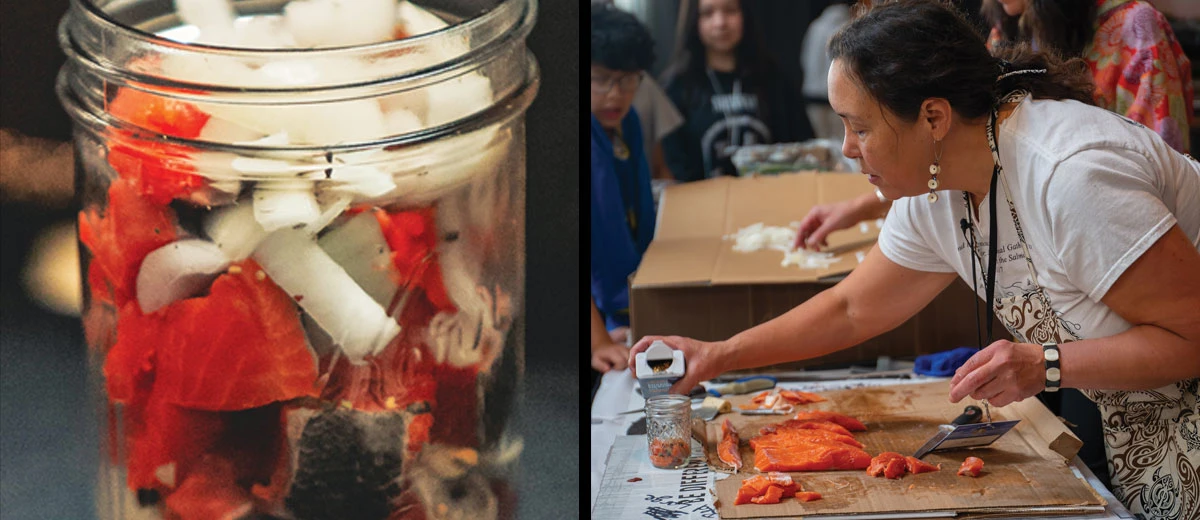
This month’s Trawl-Free table recipe comes from Juneau resident Melanie Taikupa Brown. She developed this pickled salmon recipe as a hands-on learning activity for the annual Elders & Youth Conference. In a 90-minute session, Melanie teaches participants how to cut fish while they make the recipe together. Everyone leaves with a jar of delicious pickled salmon that will be ready to eat in three days. While this is not a generational recipe passed down through families, it has become a valuable teaching tool for the next generation. Read Melanie’s full interview with Melissa Norris in the March 2026 issue of Fish Alaska magazine to learn more about how trawl bycatch is impacting Alaska’s subsistence fishing communities.
Ingredients
- 2 lbs salmon
- 2 onions
- 2 c white vinegar
- 1-1/2 c water
- 6 tbsp sugar
- 2 tbsp salt
- 2 tbsp mixed pickling spice
- 6 bay leaves
Prepare Pickled Salmon
- Skin and debone salmon. Some people prefer to leave the skin on. Cut into 1-inch by 2-inch cubes. Slice each onion into 1/4-inch thick slices.
- Bring to a boil the vinegar, water, sugar and salt. Allow to cool.
- Layer salmon pieces in a bowl or jar, alternating between salmon and onion slices, pickling spice, and bay leaves.
- Pour cooled liquid over layered salmon, covering completely.
- Refrigerate for three days before eating.
Melanie Taikupa Brown exists because of salmon and began advocating for them with her friends at SalmonState when she began her organizing work to oppose the still-proposed Pebble Mine. Melanie hopes that we can all continue to learn a better way by following the example of how salmon live their lives in a cycle of growth, return, and giving.
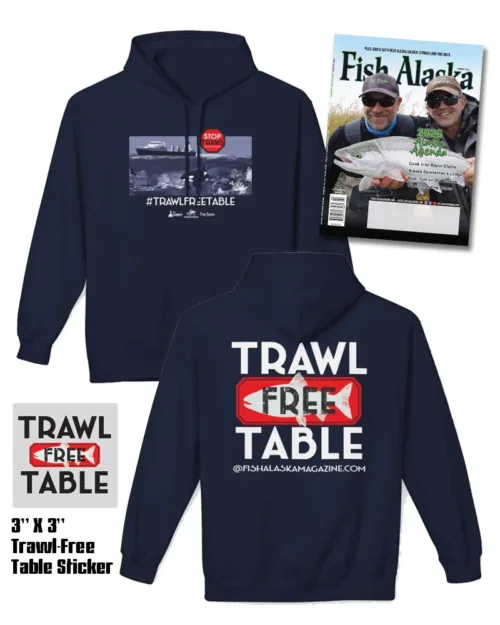
Support sustainable fishing in Alaska and look good doing it. Shop Fish Alaska’s Trawl Free Table hoodies and bundles.

Looking for more Trawl-Free Recipes? Check out our full Trawl-Free Table Recipe Library from Fish Alaska!
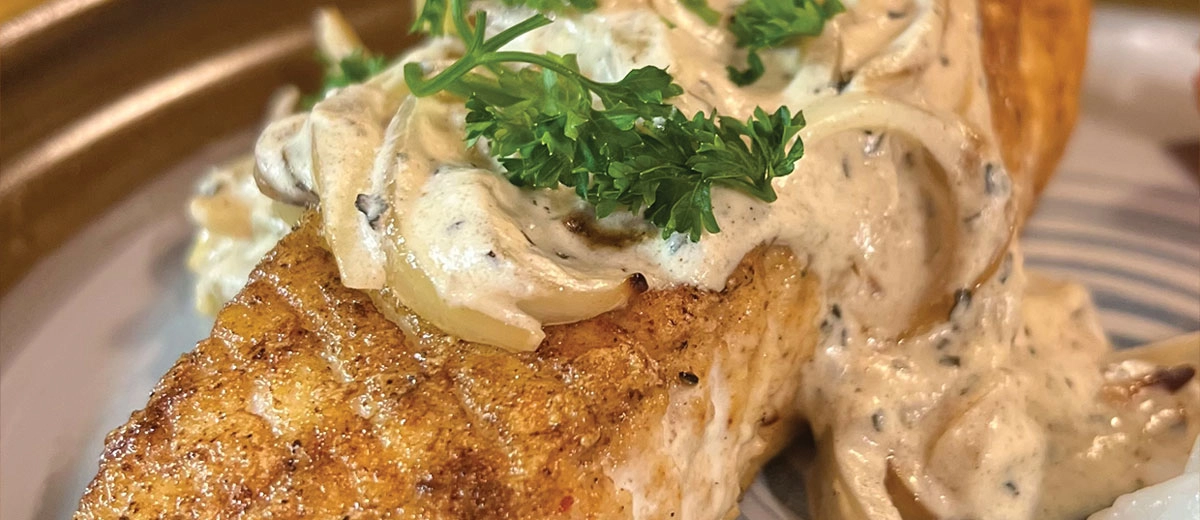
Pan-Fried Halibut With Sour Cream and Onion Sauce
Pan-fried halibut is one of those meals that proves simple can still be memorable. This recipe keeps things straightforward: Read More...
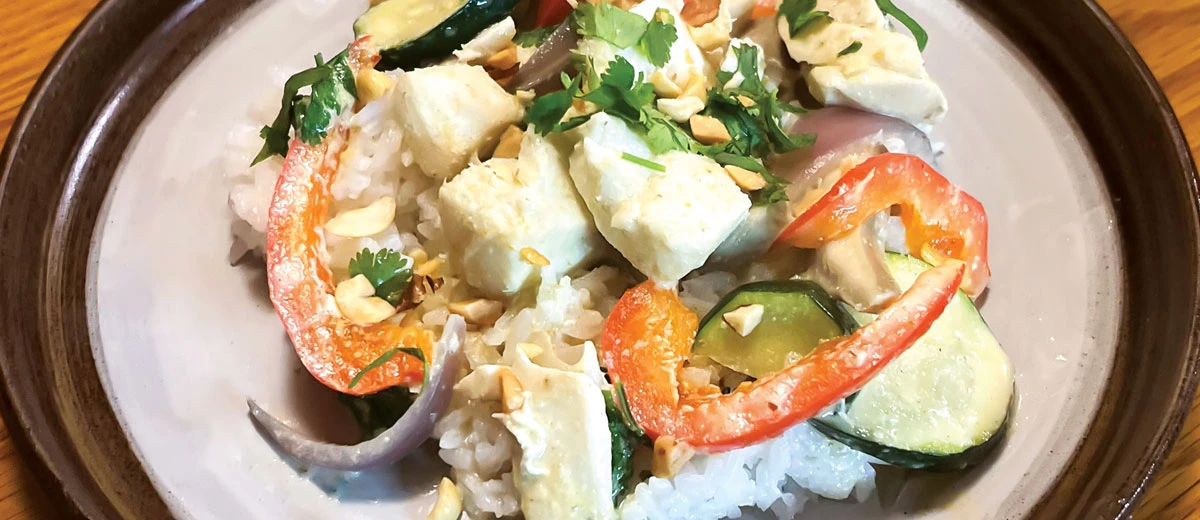
Coconut Halibut Curry
Coconut Halibut Curry is a rich, warming dish that comes together in under 30 minutes and makes the most Read More...

Crunchy Baked Halibut Bites
Halibut bites get a nutritious upgrade in this baked recipe from Sitka fisherman and nutritionist Lexi Hackett of Fish Read More...
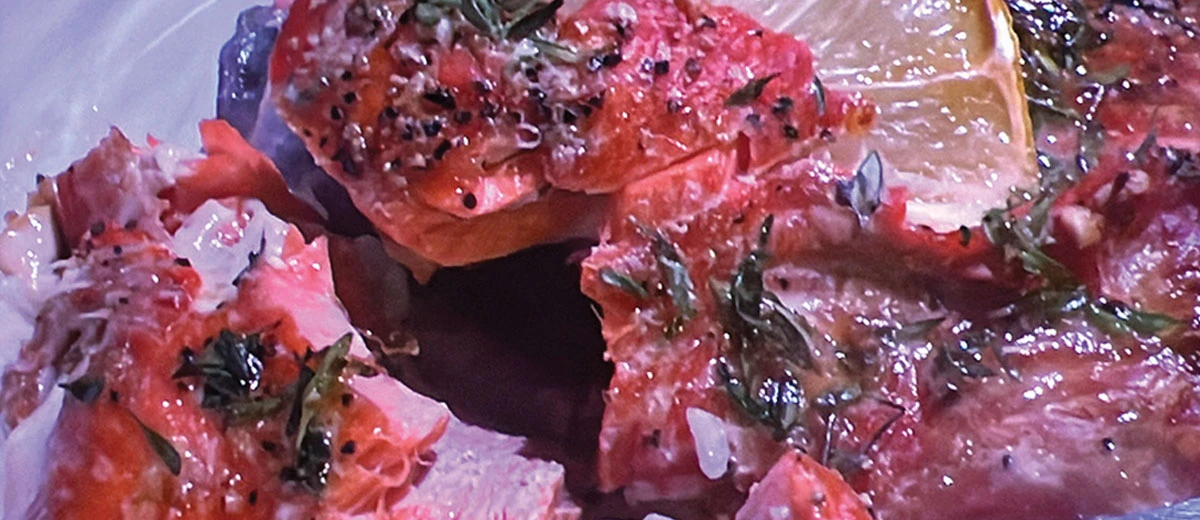
Alaska Birch Syrup SAKred Salmon Recipe
Alaska Birch Syrup SAKred Salmon is the kind of recipe that could only come from Alaska. Birch syrup tapped Read More...