

Trawl-Free Recipe provided by The Kannery Restaurant in Homer, Alaska

The Kannery Restaurant owners are committed to local sourcing and sustainable fishing methods.
This dish features sockeye salmon caught in the Homer area by the F/V Desire, captained by Nathan Buchanan, and the FV Douglas River, captained by Sammy Cotton. Both captains are lifelong Alaskans and commercial fishermen who fish for salmon in the lower Cook Inlet.
We source our salmon through Citizen Salmon, a local supplier. Aaron, the owner, specializes in salmon and is a master smoker. We highlight his smoked black cod on our menu during the summer months.
To truly highlight the seafood, we keep this recipe simple, adding most of our flavor with Alder wood. We work with Smokey Bay Alder Company for our wood. In Alaska, alder is considered a noxious species, so many people want it trimmed from their property. Sandy and his team harvest this amazing wood for us to use for plank smoking and serving.
We prefer our wood planks milled to a thin 1/4-inch board. For home use, a thicker board is recommended, and you might consider soaking it for multiple uses. You can also experiment with different soaking liquids. At the restaurant, we aim for a full smoke flavor and are not concerned about multiple uses.
Kannery Compound Butter
1 lb butter (softened)
2 tbsp minced garlic
3 tbsp blackening seasoning (we make our own; feel free to use your favorite)
1 tbsp salt
Directions
Allow your board to heat up on the grill before adding the salmon. Season the fish with salt and pepper. As soon as the board begins to smoke, move it to the side of the grill to reduce the heat. Cover the grill with its lid. Cook until you see the first signs of white fat appearing on top of the fish or until you reach an internal temperature of 130°F to 145°F.
Serve with your favorite vegetables and starch, topped with Kannery compound butter and lemon.
Decoding Seafood Sustainability Labels: An Interview with Chris Miller, The Kannery Restaurant in Homer
By Melissa Norris
Alaska feeds the world—but when industrial fishing harms the fisheries and communities that sustain us, it’s time to ask the hard questions. Many of us here in Alaska are privileged to catch our own high-quality fish and seafood, but when we dine out or want to add a little variety to our table, the story behind what’s on the plate becomes less clear.
Beyond our state’s borders, that story grows even murkier. Most people have little sense of where their seafood actually comes from, or how vulnerable these fisheries can be if they’re pushed too hard. The ocean may seem endless, but its abundance is not.
“Sustainable” isn’t a buzzword; it’s a promise that should be earned on the water, not just printed on a package. To sort signal from noise, I sat down with Chris Miller, co-owner of The Kannery in Homer—Alaska’s first known restaurant to carry a Trawl-Free designation on its menu. We had a talk about how seafood labels really work, where they fall short, and how buyers can make choices that keep our oceans and fisheries thriving.
Labels vs. Reality: What “Sustainable” Usually Means
Walk any seafood department in grocery stores everywhere and you’ll see badges and ratings: third-party eco-labels that certify fisheries against a standard. Those tools can be helpful—but they don’t all measure the same things.
“It’s easy to think anything with a seal is automatically ‘good,’” says Chris Miller. “But most certified seafood labels don’t account for bycatch—what gets caught and killed unintentionally—or seafloor impacts from gear like trawls. That’s where the public gets misled.”
Here’s the Takeaway:
• Eco-labels (for example, global certification programs like the Blue Label given by the MSC—Marine Stewardship Council) focus on whether a fishery meets a written standard. They assess stock status, management, and chain-of-custody. Critics argue some programs don’t fully weigh bycatch or habitat impacts, if at all, which, at current levels, are not sustainable for many bycatch species and the demersal habitat.”
• Advisory lists (think consumer guides like Seafood Watch) synthesize science and policy into “Best/Good/Avoid” signals. They can be useful, but may lag behind local conditions and can miss gear- or location-specific nuance, hence the pollock fishery being endorsed as sustainable.
• Industry-run programs like the Responsible Fisheries Management certification program originated by the Alaska Seafood Marketing Institute with industry partners, aim to shape perspective in the marketplace. Critics want to support local fishermen and account for gear impacts and bycatch.
Bottom line: A label is at best a snapshot, or at worst a marketing tactic, but it’s not a sustainability guarantee. Ask what the program actually measures—stock health, habitat damage, bycatch (in real numbers, not a percentage that compares to the massive catch of targeted species itself), labor, traceability—and where those data come from.
Why “Trawl Free” Matters on a Menu
“Trawling” means dragging a massive net through the water, most often along the seafloor. It’s efficient for high-volume species like pollock and cod—but that same efficiency can mean high bycatch and habitat damage, especially in bottom trawls.
“If you claim ‘trawl free’, you’ve got to walk the walk,” Chris says. “That means leaving out some more affordable and readily available items—We lean into pot-caught, hook-and-line, and diver- or hand-harvested options when they’re available.”
The Kannery’s team screens every item and every shipment. They’ve sent back “look-alike” rockfish that arrived as trawl “shatter packs” and even re-engineered a Caesar dressing—swapping trawl-caught anchovies for Wild Planet anchovies and, later, for sustainably-harvested seaweed to capture that briny umami without the bycatch baggage.
Local First: Traceability You Can Shake Hands With
Mass-market labels circulate in stores, but local names endure on Alaska’s docks and in its communities. The Kannery buys halibut from Kachemak Bay Seafoods (sourcing from multiple Homer boats), Alaska pot-caught spot prawns and crab from Seafoods of Alaska, and salmon from Citizen Salmon—a tight, local circle that makes traceability tangible. And there are Alaskan owned businesses like these all around the state.
“When your fish comes off boats you can see from the dining room, it changes the conversation,” Chris says. “You’re not just buying a species—you’re backing a fishery and a community.”
That local loop lowers transport emissions, shortens supply chains, and builds resilience for small-boat fleets that harvest with low-impact gear. It’s good for Alaskans all the way around. The Kannery is proof you can run a beloved, creative kitchen—live music, rotating menus, northern-coast ingredients—and still stand firm on sourcing. That’s leadership worth labeling.
Watch the full interview with Chris Miller from The Kannery as part of our new “Trawl Free Table” podcast and get tips on how to read a seafood label like a pro and more at fishalaskamagazine.com/trawl-free-table.
It’s time to come together to create a trawl-free seafood certification. Then more restaurants, grocery stores and consumers can truly support sustainable seafood.
Melissa Norris is Publisher/Owner of Fish Alaska and Hunt Alaska.
Looking for more Trawl-Free Recipes? Check out our full Trawl-Free Table Recipe Library from Fish Alaska!
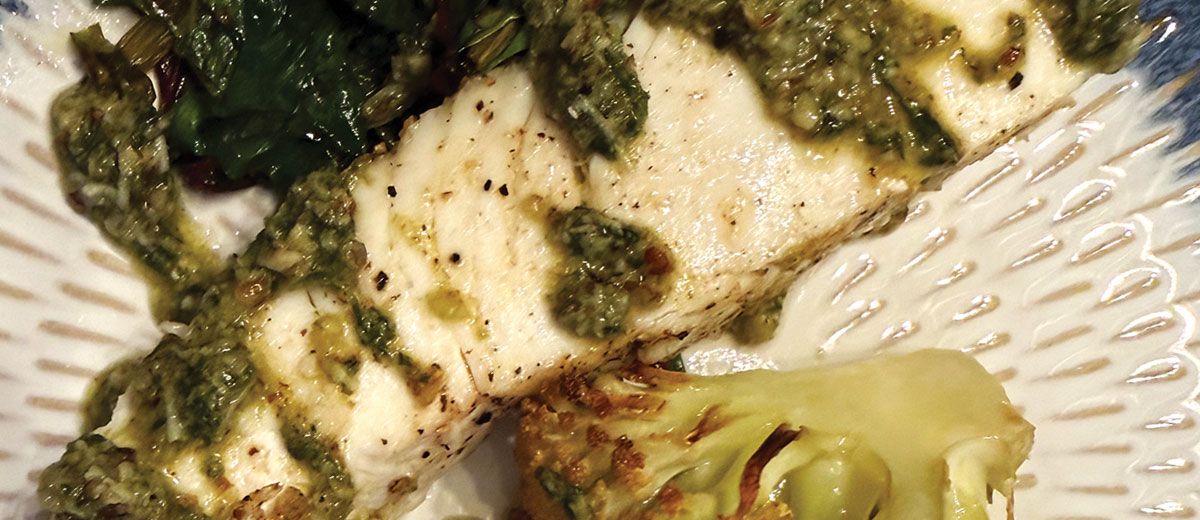
Seared Halibut With Carrot-Top Pesto
Seared halibut gets a fresh upgrade with a bright carrot-top pesto made from the greens most of us toss straight into the compost. A quick, hot sear gives the fillets a crispy outside while Read More...
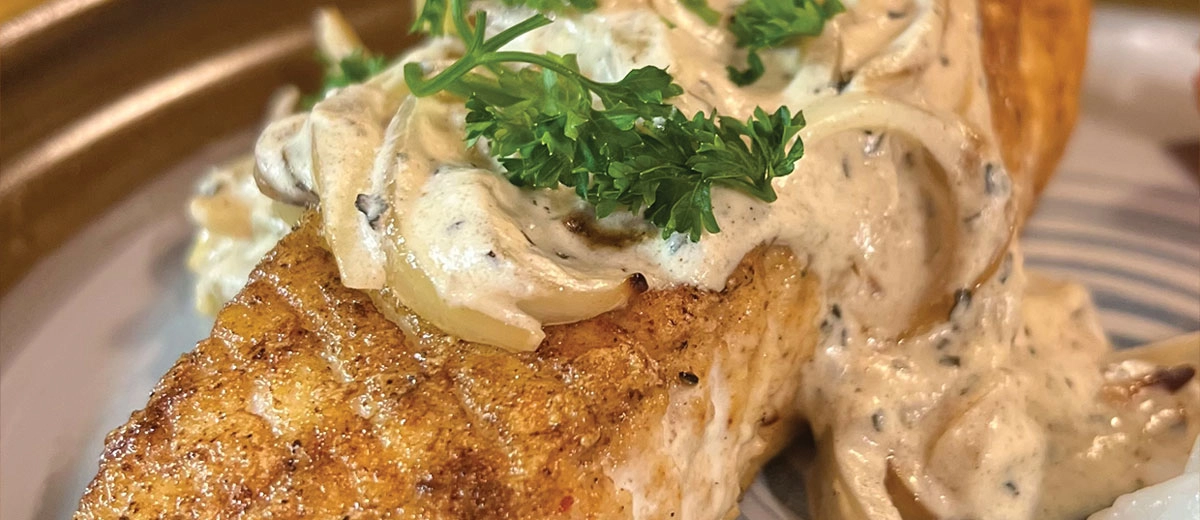
Pan-Fried Halibut With Sour Cream and Onion Sauce
Pan-fried halibut is one of those meals that proves simple can still be memorable. This recipe keeps things straightforward: a light, seasoned flour coating gives the fish a nice golden crust, while a warm Read More...
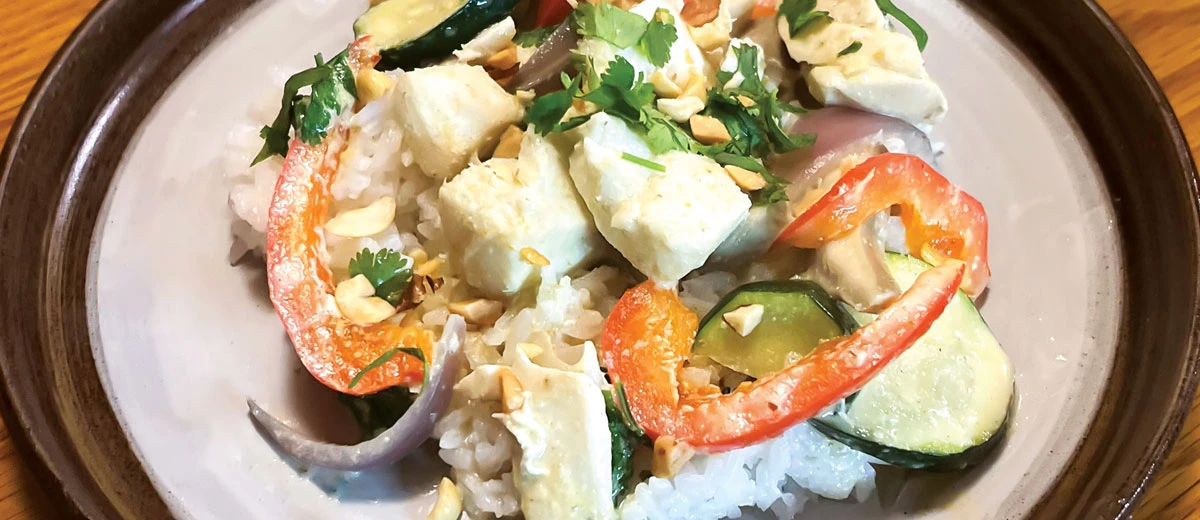
Coconut Halibut Curry
Coconut Halibut Curry is a rich, warming dish that comes together in under 30 minutes and makes the most of fresh, wild-caught Alaskan halibut. Creamy coconut milk, bold curry paste, and tender vegetables create Read More...

Crunchy Baked Halibut Bites
Halibut bites get a nutritious upgrade in this baked recipe from Sitka fisherman and nutritionist Lexi Hackett of Fish & Family Seafoods. Coated in hemp hearts and warm spices, then served alongside sweet potato Read More...